Civil servants spend a significant amount of their time wrestling with data: spreadsheets that drift, files that multiply, information that gets lost between departments. Without the right tools, public data remains underused.
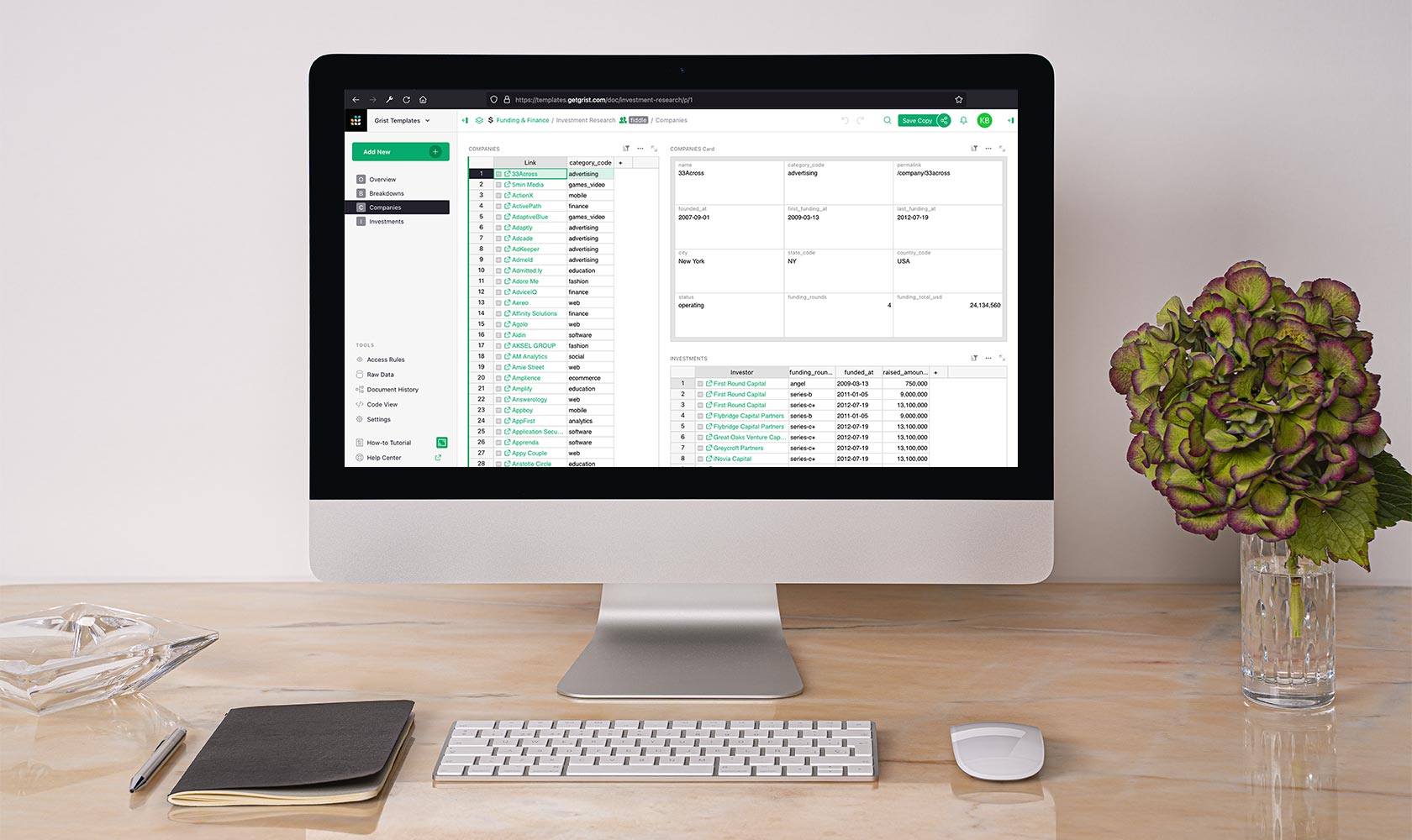
Grist changes the equation. This no-code open source tool allows any civil servant to structure their data, create custom views, and share them — without writing a single line of code, without depending on proprietary software. Hosted with full data sovereignty, actively contributed to by France at a European scale, it is a wager on public data as a common good.
Reflection.
Picking up an existing tool, starting from scratch
Context
In the summer of 2023, the Données & Territoires team at ANCT was looking for a UI Designer to contribute to the development of Grist — a no-code open source tool enabling public organisations to manage, visualise, and share data flexibly and with full sovereignty. The team, made up of a UX Designer, several developers, and a manager, was working to deploy the tool within the French public administration while actively contributing to Grist Core, the open source project maintained by a team based primarily in the United States.
The mission was clear: contribute to improving the tool, adding new features, and accelerating its deployment across French public services.
My role
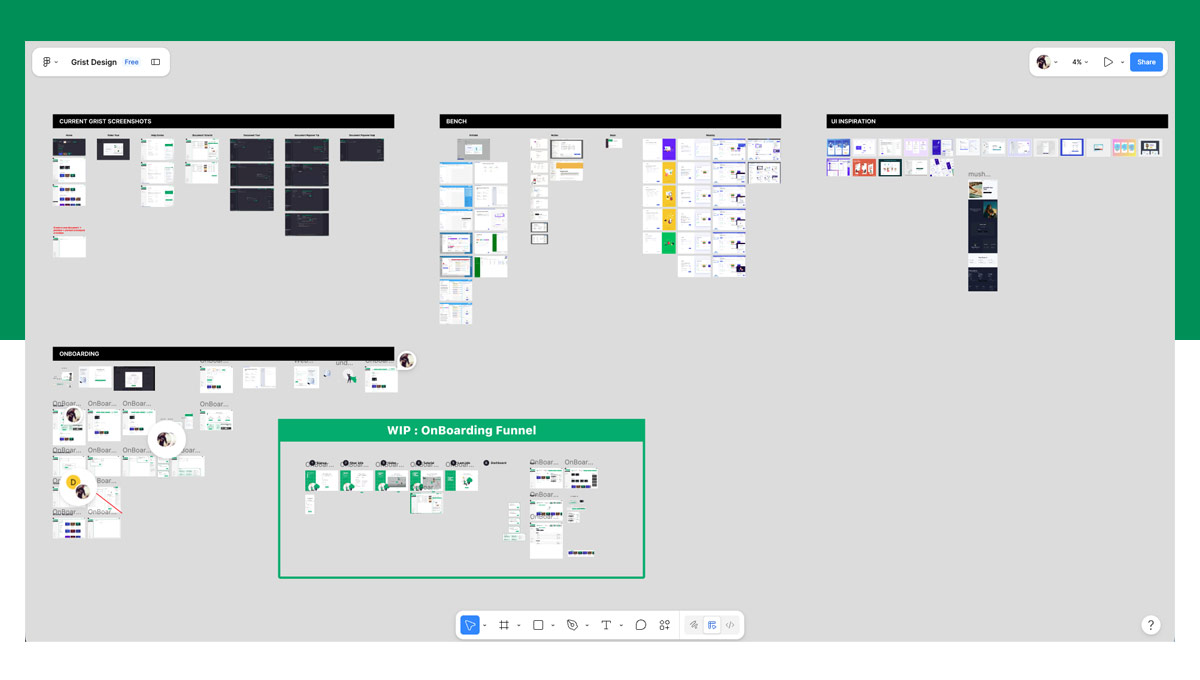
I joined the team in October 2023 as a freelance UI Designer, tasked with picking up the project where it had been left. A designer had previously worked on Figma mockups, but the live product had moved on considerably since then. The decision was made to start from scratch: clean up the existing files, rebuild a clean and structured Figma workspace that accurately reflected what was actually in production.
From day one, I had the opportunity to attend the Le Numérique en Commun event in Bordeaux, where I met the Grist team from the United States in person. An immediate immersion into the project's ecosystem, its stakeholders, and its challenges.
Process.
Contributing to an open source tool while managing its own constraints
Remote organisation and collaboration
Work was organised entirely remotely, with two to three weekly video calls with the Head of Product — conducted in English — complemented by daily exchanges on Slack. This rhythm allowed for autonomous progress while staying permanently aligned with the team.
The distinctive nature of the project lay in its dual character: contributing to Grist Core — the open source project shared with the American team — while accounting for the specific constraints and priorities of ANCT and Bêta.gouv. Regular roadmap check-ins helped coordinate efforts and ensure that developments served all parties. On the French side, a dedicated instance was deployed with its own data. Every contribution to Grist Core therefore needed to be followed by a migration to pull in the latest advances — all managed through Git for version control.
The user community also played an active role: as an open source project, feedback and proposals came in directly from the community forum, providing a valuable source of real-world input.
Audit and laying the foundations
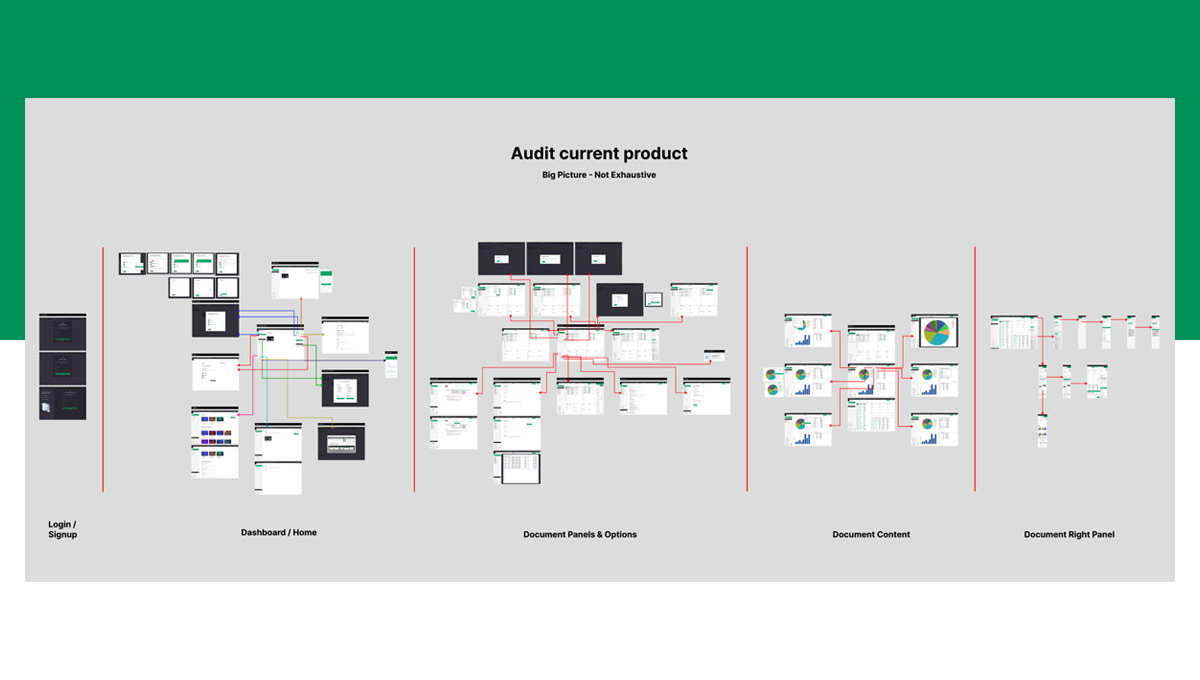
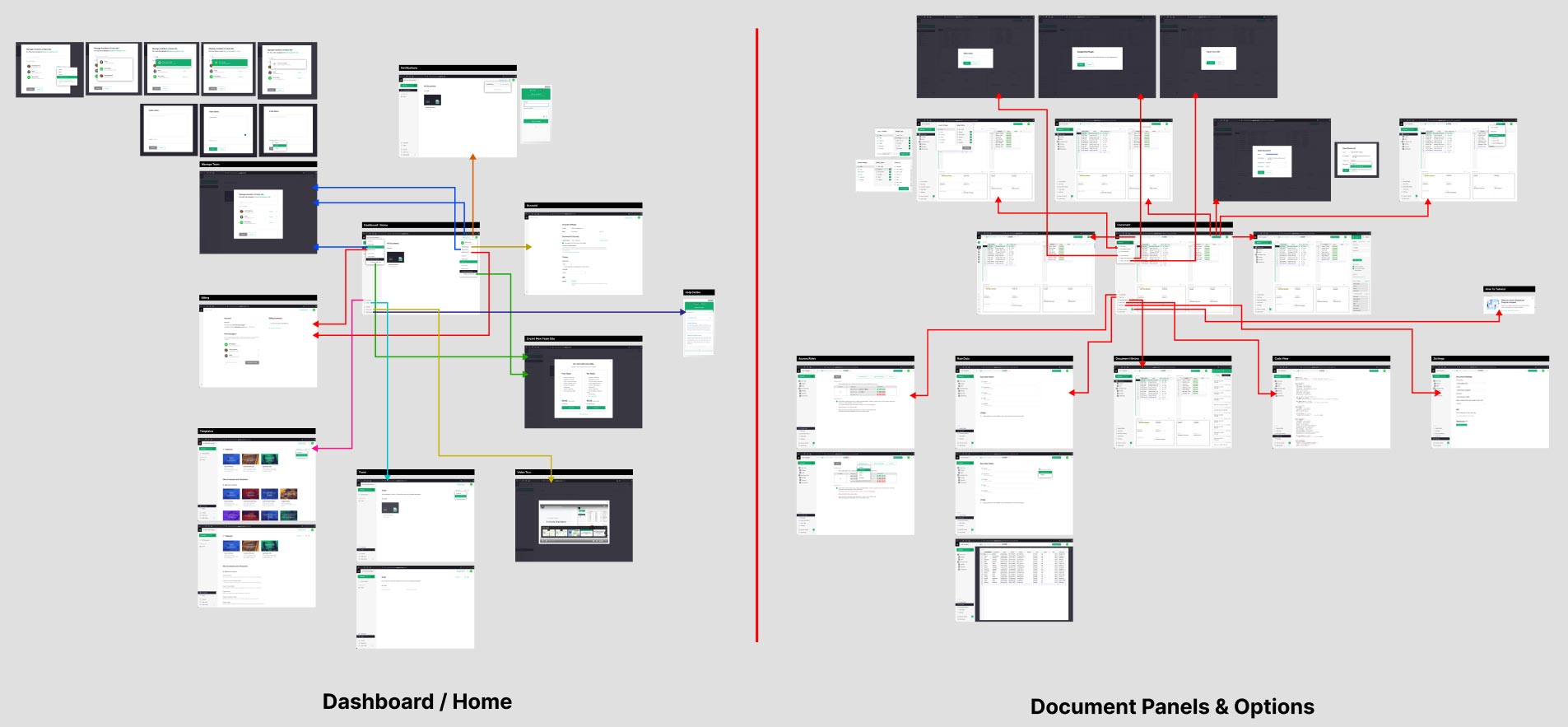
I started with a comprehensive audit of the production tool: breaking down the product and mapping all user journeys in Figma. This work quickly surfaced inconsistencies and concrete opportunities for improvement.
In parallel, I laid the foundations of a design system: colours, typography, icons, then the main components — buttons, forms, and the application skeleton (header, navigation, sidebar). This structured base allowed me to iterate quickly on priority topics.
Areas of focus
With the foundations in place, the mission centred on four priority areas:
- Improving the user settings area
- Improving the spreadsheet view
- Adding a form feature integrated into the spreadsheet
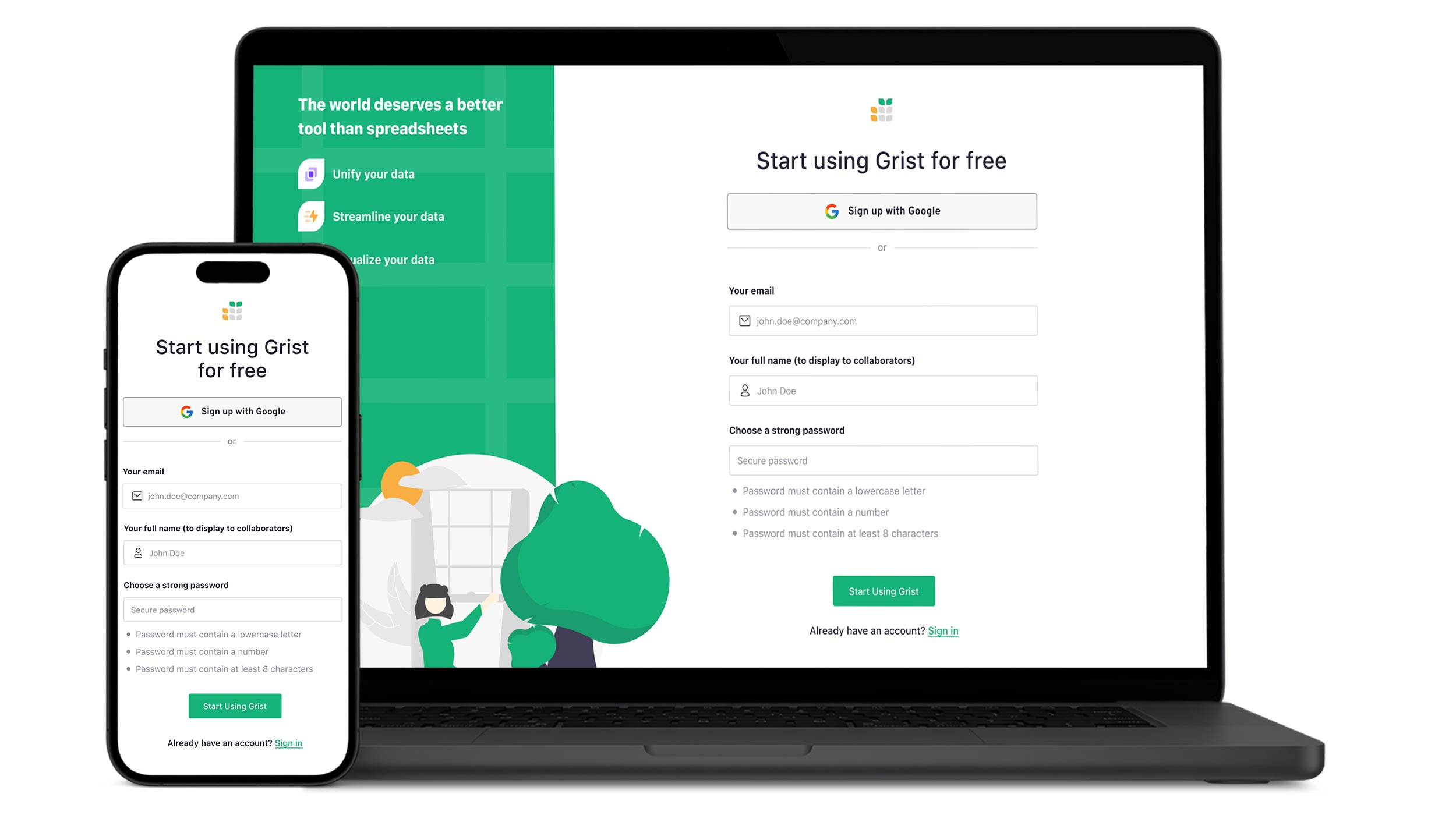
- A complete overhaul of the onboarding funnel
Focus — The form feature
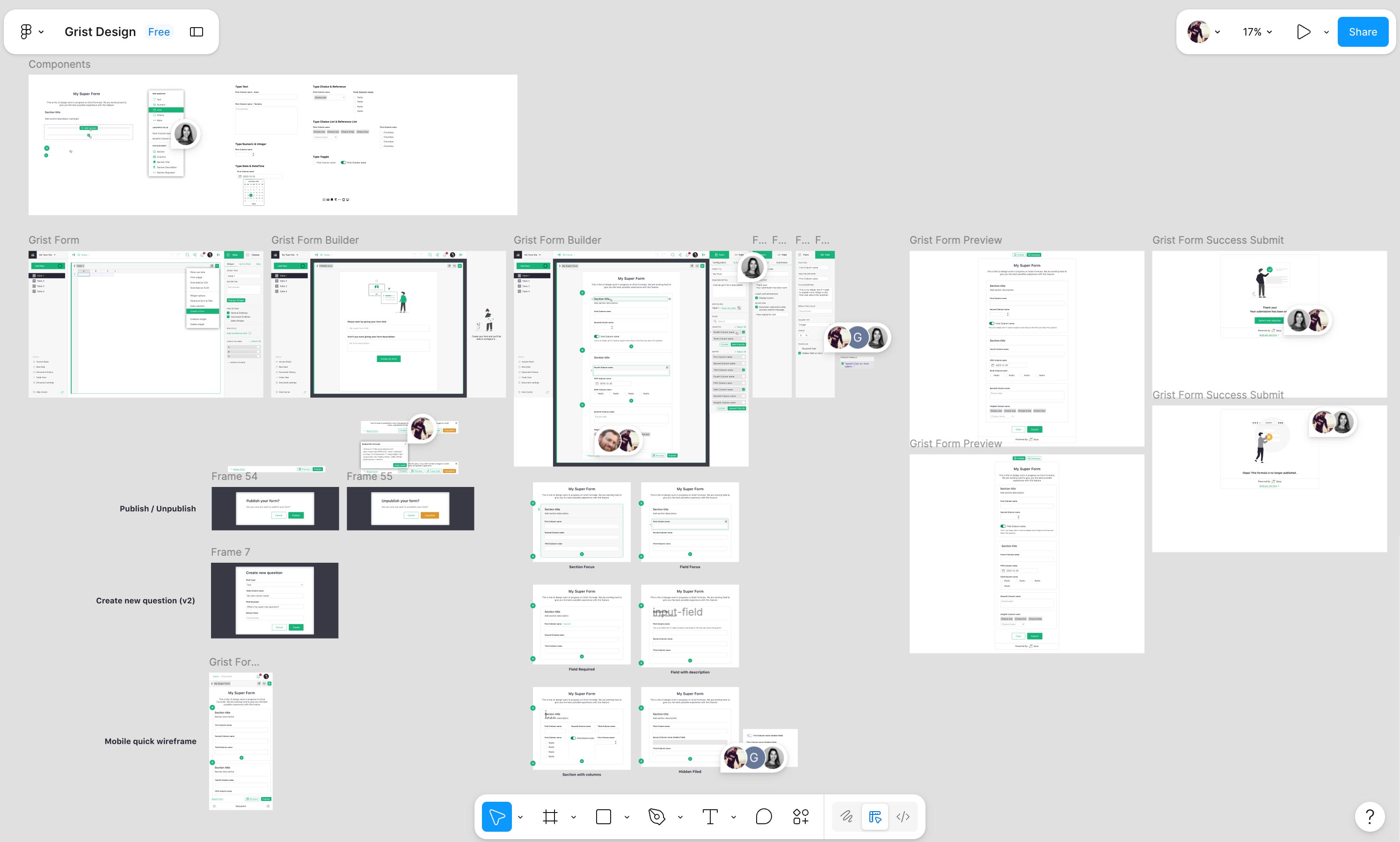
Among the topics covered, implementing forms was one of the most significant features we worked on. The idea: allow an administrator to configure a form directly from their Grist spreadsheet, share it externally, and automatically receive responses as new rows. A highly anticipated feature among civil servants looking to simplify data collection from a wide range of people, without requiring them to use the tool themselves.
I always approach this type of work with a benchmark of existing solutions — Airtable, Notion, Google Forms, and other no-code tools — combined with broader UX and UI inspiration research. Everything is catalogued and annotated in Figma to feed into the brainstorming phase with managers and developers. From there, initial directions emerge, refined through calls and Slack exchanges.
When a piece of the experience was sufficiently developed, we would not hesitate to build a POC to test it in real conditions. This step allowed us to confront design intentions with technical reality and adjust things that mockups alone could not anticipate.
Brief technical overview
- Figma
- Grist Core (open source)
- Git / GitHub
- Slack / Zoom
Retrospective.
Takeaways and lessons learned.
What I learned
This mission posed a particular challenge: taking on an existing, mature open source tool while starting from zero on the design side. Rebuilding a clean Figma architecture from the production reality rather than outdated mockups requires a good deal of patience and adaptability.
The other major lesson was managerial: simultaneously managing contributions to Grist Core and the deployment of an independent French instance, with stakeholders spread between Paris and New York. Finding the right balance between the priorities of the American team and the specific needs of the French public administration was the very essence of the mission.
What came next
When I left in March 2024, I delivered an up-to-date Figma file accurately reflecting the production state of the reworked screens, along with a design system structure ready to grow. The project has since been taken over by a dedicated team formed within DINUM, to move Grist beyond the ANCT scope and deploy it more broadly across the French public administration — while continuing to contribute to improving the tool.
Today, this team continues to grow the solution and expand its community.

Kevin Bizien
UI & Design System specialist
Want to tell me about your UI project? Contact me at bonjour@kevinbizien.com and we can start talking soon!